
Air Conditioning Installation in Atlanta, Planned Around Humidity
A new air conditioner in Atlanta has two jobs: dropping the temperature and wringing moisture out of air that often feels like a damp towel from May to September. HVAC Service Near Me hands your project notes and ZIP code to independent metro installers who give quotes. Reply times differ from one county to the next and stretch out in peak summer.
- Why a too-big unit leaves Atlanta rooms clammy
- Eight lines to look for on every bid
- Georgia license and permit checks before you sign
Approximate square footage, number of stories, how it is heated now, and whether the current system sits in the attic, basement or crawl space.
Please keep this page open.
- We pair the request with an independent contractor or partner network that works in your ZIP code.
- The contractor gets in touch to go over the details and agree on a visit.
- After checking the system they quote the job, and you choose whether to proceed.
Read how requests are handled.
Online requests are not connected to a contractor network yet. Nothing you typed was sent or saved. Please phone us instead, or try again later.
Call (888) 555-0199Sizing for a muggy climate
The most expensive mistake in an Atlanta install is a unit that is too big. An oversized system hits the thermostat setting fast and shuts off before the indoor coil has run long enough to pull water out of the air. The result is a house that reads 74 degrees and still feels sticky, with musty closets by August. A right-sized system runs longer, steadier cycles and keeps indoor humidity in check.
The defensible way to pick tonnage is ACCA Manual J. The installer measures each room and enters wall and attic insulation, how much glass faces west, how leaky the shell is and the design temperature for the area. Swapping in the same tonnage as the old unit is a guess; many older Atlanta homes have had insulation, windows or additions changed since the last system went in. Ask each bidder how they arrived at the size they quote.
System types that fit Atlanta houses
| Option | Where it tends to fit | Things to weigh |
|---|---|---|
| Condenser plus gas furnace | Houses with a gas line, common in suburbs built from the 1970s through the 1990s | Furnace and coil may need replacing at the same time if they are old or mismatched |
| Heat pump with air handler | All-electric houses, or owners ready to retire the furnace too | Mild winters suit heat pumps well; ask about backup heat strips for cold snaps |
| Variable-speed or two-stage system | Homes where humidity control is a priority | Longer low-speed cycles remove more moisture, at a higher equipment price |
| Ductless mini-split | Bonus rooms, additions, garage conversions, homes without ducts | Each indoor head needs a wall location and a condensate route |
| Zoned system | Two-story houses where the upstairs runs hot | Needs duct dampers and a compatible control; duct condition matters |
Rules that apply to a new system in Georgia
Federal efficiency rules group Georgia with the other Southeast states. For a split central AC smaller than 45,000 Btu/h that goes in after January 1, 2023, the floor is 14.3 SEER2. Anything above that floor is your choice and may or may not pay back depending on how long you plan to stay. Because of the EPA AIM Act transition, outdoor units now leaving distributors are charged with R-410A or one of the newer A2L blends, R-454B and R-32 being the usual two, so a new condenser is generally paired with a matching new indoor coil rather than an old one.
Inside city limits and across the metro counties, swapping a system is normally permitted work, and the licensed installer files for it. Ask who handles the permit and inspection, and keep the final paperwork. Check current incentives too: Georgia Power and the electric membership cooperatives that serve many suburbs sometimes offer efficiency programs, and you can type your ZIP code into the ENERGY STAR rebate finder to see current offers.
Line items a full installation quote should show
- Every model number: Condenser, coil or air handler, plus the furnace when it is part of the job. With those you can check the pairing is an AHRI-rated match.
- Load calculation: A Manual J summary or at least the method used to choose the size.
- Line set and drain: New copper or reused copper, and what happens to the drain line, trap and overflow switch.
- Ductwork: Inspection, sealing or replacement of attic and crawl space ducts, and any return air changes.
- Electrical: Disconnect, whip, breaker sizing and any panel work needed for the new equipment.
- Permit: The name on the application, the fee inside or outside the total, and who is home when the inspector visits.
- Old unit haul-away: Refrigerant recovery from the old system is a federal requirement, and the quote should say who takes the metal away.
- Startup and commissioning: Measured charge, airflow and temperature split recorded at the end of the job.
What drives the installed price in metro Atlanta
Installed price swings widely for good reasons. These are the main ones.
Each step up in size or in efficiency rating raises what the equipment alone costs.
Leaky, undersized or sagging attic ducts are common in older homes and add labor if corrected.
A tight attic, a crawl space or a closet with limited clearance can lengthen the job.
Cooling only, heat pump, or a full furnace and coil replacement are very different jobs.
Older panels sometimes lack room or amperage, and a fresh outdoor disconnect is a frequent add-on.
Questions to put to each Atlanta bidder
- Which Class I or Class II conditioned air license is on file for your company?
Georgia's licensing board issues both. Punch the number into the Secretary of State lookup to see status and holder name. - Did you measure the house or copy the old tonnage?
A measured load calculation is the stronger answer. - How will this system control humidity?
Listen for talk about blower speed, run time and right sizing, not only temperature. - Is the indoor coil being replaced?
A new outdoor unit on an old coil is often mismatched in rating and refrigerant. - Will you register the equipment, or should I?
Parts coverage often shrinks if nobody registers the serial numbers within the maker's deadline. - Who carries the permit, and when is the inspection?
The installer normally files it; you should see a passed inspection at the end.
How HVAC Service Near Me fits in
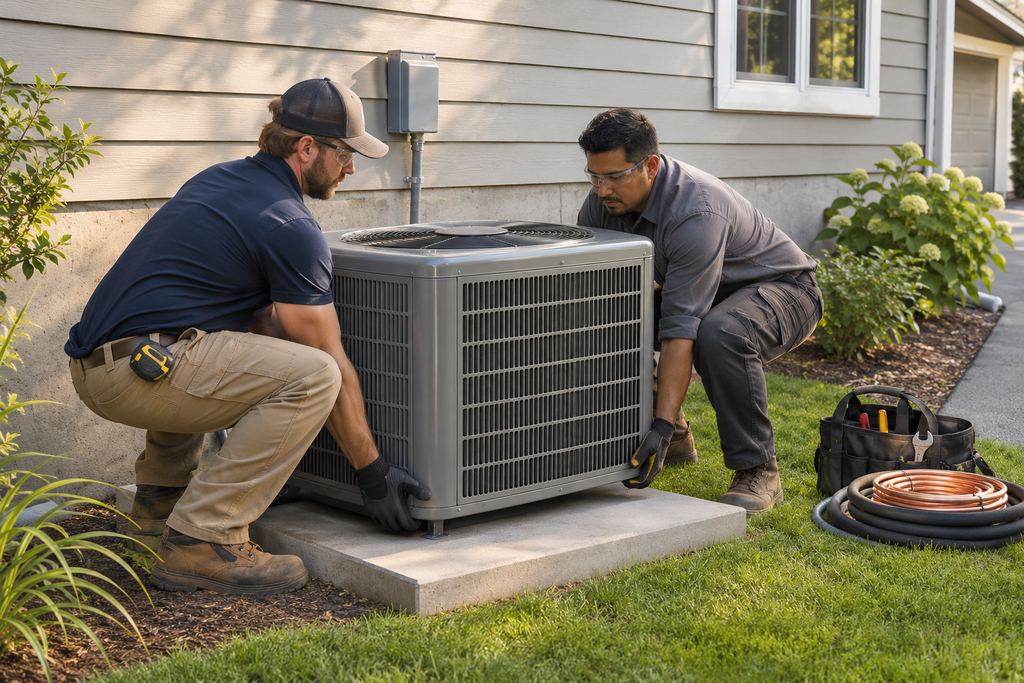
Nobody at HVAC Service Near Me sets a condenser on a pad. There is no equipment for sale here, no price list, and no favored brand. The request travels to independent installers or partner networks active near your address, and you choose whether to hire anyone who replies. Getting two or three written quotes on the same scope is the easiest way to spot a number that is out of line. If the current unit has failed and the house is unsafe in the heat, start with an urgent Atlanta request, or check whether a repair can buy time while you compare bids. The national AC installation page and the installation cost section go deeper on equipment and pricing.
How a service request works
HVAC Service Near Me is a referral service. We don't send our own technicians. We connect you with independent local contractors.
- Describe the job
Type your ZIP code, pick a service and add a line or two about the problem or project.
- We pass it on
An independent HVAC contractor or partner network that works in your area and does that kind of job receives it.
- You hear back
The contractor gets in touch to check the details and set a time to come out.
- The choice is yours
After a diagnosis the contractor gives you a quote. Price, timing and warranty are agreed directly between the two of you.
Other AC services in Atlanta
Frequently asked questions
How much does it cost to install central air conditioning in Atlanta?
No honest figure exists before someone measures the house. Size, SEER2 level, duct repairs, panel work and whether heating equipment is swapped at the same time all shift it. Collect itemized bids from licensed firms; national price drivers are in the installation cost section.
Will the house be without cooling for long during the swap?
When only the condenser and coil change, crews commonly finish between morning and evening. New ducts, a furnace or an electrical upgrade add time, sometimes a second or third day, so ask for the schedule in writing.
Should an Atlanta homeowner consider a heat pump instead of AC plus furnace?
Often it is worth pricing. Winter here is short and mild, so a heat pump covers most cold days on its own and leans on backup heat only during the occasional hard freeze. Run the numbers using your actual electric and gas rates.
Does an Atlanta AC swap need city or county paperwork?
Expect a mechanical permit whether you live inside the city or in a surrounding county. Your installer normally applies; get that commitment on the contract.
When did central air become common in Atlanta homes?
Central air spread through US homes from the 1960s on, which is why older intown houses often have ducts added later in attics or crawl spaces, sometimes undersized for today's equipment.
Related guides and services
Ask for Atlanta installation quotes
Give us a ZIP code, rough square footage and which pieces of equipment are on the way out. Independent contractors in your area can reply with quote appointments, depending on their schedules.
Approximate square footage, number of stories, how it is heated now, and whether the current system sits in the attic, basement or crawl space.
Please keep this page open.
- We pair the request with an independent contractor or partner network that works in your ZIP code.
- The contractor gets in touch to go over the details and agree on a visit.
- After checking the system they quote the job, and you choose whether to proceed.
Read how requests are handled.
Online requests are not connected to a contractor network yet. Nothing you typed was sent or saved. Please phone us instead, or try again later.
Call (888) 555-0199