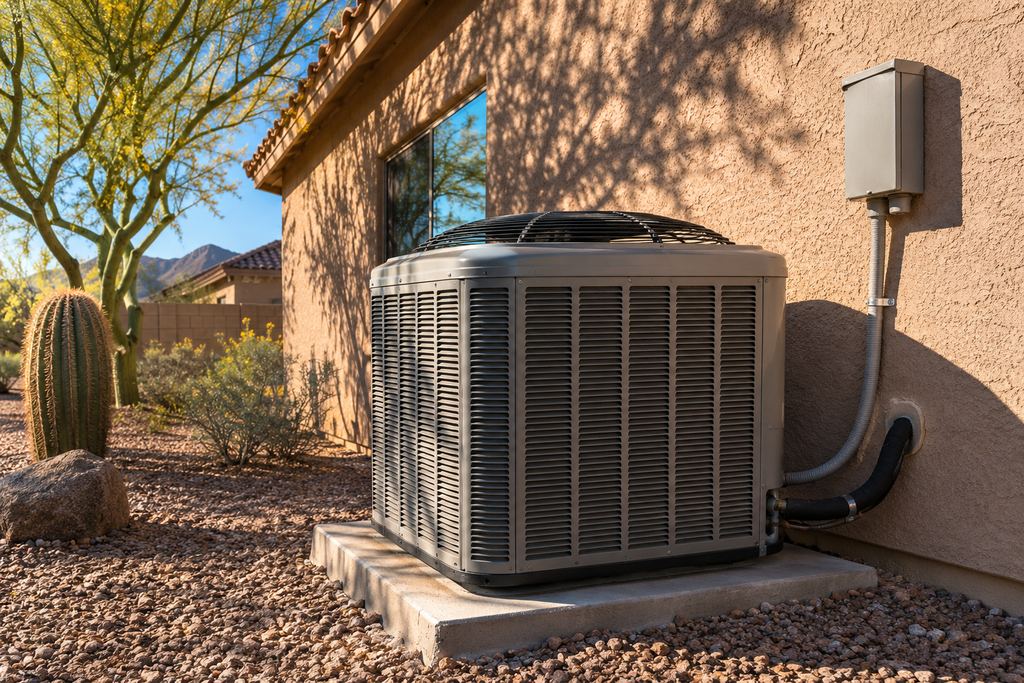
AC Repair in Phoenix, Arizona
In Phoenix an air conditioner may barely rest between May and late September, so a small fault becomes a hot house quickly. Describe the trouble to HVAC Service Near Me and the request is forwarded to an independent HVAC contractor whose routes include your ZIP code.
- One short form: ZIP code, equipment, symptom and the temperature indoors
- Independent local contractors; confirm any license yourself at roc.az.gov
- Insist on the diagnosis and price on paper before anyone starts
Give your ZIP code, the equipment type if you know it, and the current indoor temperature. Availability varies by part of the Valley and by week.
Please keep this page open.
- We pair the request with an independent contractor or partner network that works in your ZIP code.
- The contractor gets in touch to go over the details and agree on a visit.
- After checking the system they quote the job, and you choose whether to proceed.
Read how requests are handled.
Online requests are not connected to a contractor network yet. Nothing you typed was sent or saved. Please phone us instead, or try again later.
Call (888) 555-0199How Phoenix heat wears out cooling equipment
Phoenix logs roughly 110 days a year at 100 degrees or hotter, and during heat waves the overnight low may never drop out of the 90s. A condenser with no cool hours to recover runs at high head pressure around the clock. Fan motors, start capacitors and contactors age faster under that load, which is why a part that limps through a Midwest summer often quits here in July.
Monsoon season, dated by the National Weather Service from June 15 to September 30, brings a second set of failures. Haboob dust packs the outdoor coil fins and the return filter, lightning and grid switching can fry a control board, and muggy weeks send more condensate down the drain than the dry months ever do.
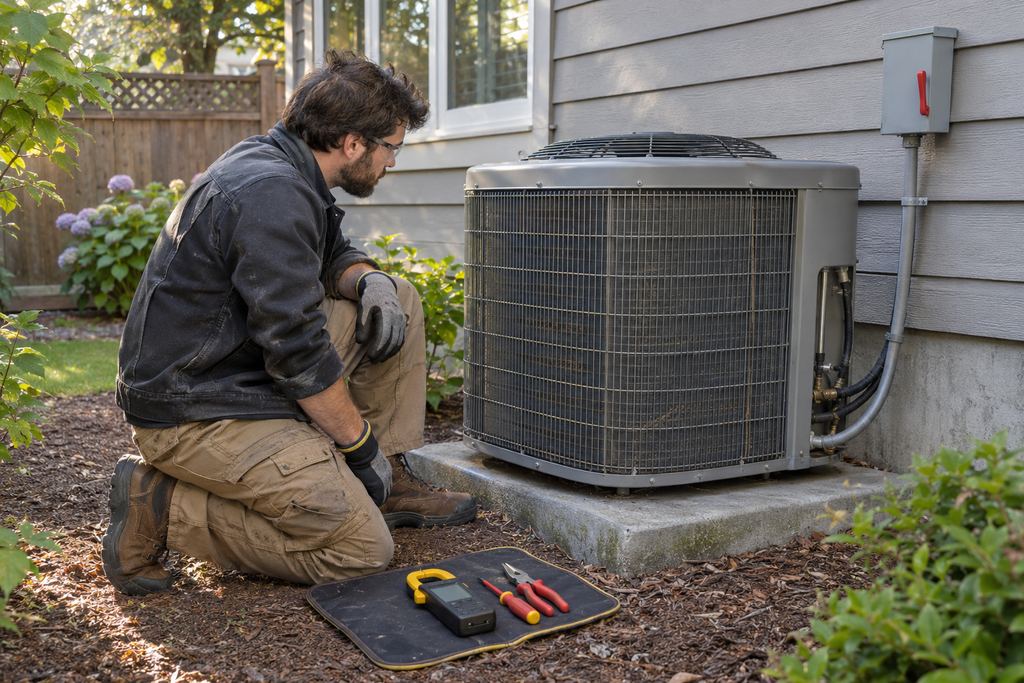
Typical scope of a diagnostic visit
- Confirming your complaint: The tech reproduces what you described, whether that is warm air from the vents, a humming outdoor unit, dripping or total silence.
- Electrical readings: Start components, contactor, both fan motors and the compressor are tested by the technician with power locked out.
- Airflow path: Return filter, blower wheel, indoor coil and the condenser coil, which in the Valley collects fine dust and seed fluff.
- Refrigerant readings: Pressures and line temperatures show charge and restrictions. Handling refrigerant legally needs EPA Section 608 certification.
- Condensate path: Attic and closet air handlers depend on an open drain and a float switch that shuts the system down before water reaches the ceiling.
- Findings you can keep: A written note of the failed component, the fix and its price, and anything that can reasonably wait for October.
Systems common in Valley houses
Name the type in your request. It changes parts, access and sometimes which trade shows up.
Owner checks versus technician work
Safe checks you can do
No tools beyond a flashlight. Turn the system off at the thermostat before opening any filter or access door.
- Confirm the thermostat is on Cool, set below the current room reading, and has fresh batteries
- Put in a clean filter; after a dust storm one can load up within days
- Find the AC breaker; if it tripped, reset it one time and stop if it trips again
- Hose loose dust from the condenser exterior, and only where your owner's manual says that is fine
- Frost on the indoor coil or copper lines means switching to Fan only until the ice melts
Leave these to a licensed technician
These involve high voltage, refrigerant or sealed components. Refrigerant work requires EPA Section 608 certification.
- Replacing a capacitor, contactor or fan motor
- Locating and repairing refrigerant leaks
- Compressor testing and replacement
- Storm damage to boards and wiring
- Opening the service panel or the home's breaker panel
Fix the old unit or start pricing a new one
Two numbers settle most of these calls: how old the system is and how big the repair is. Many technicians use a quick screen called the $5,000 rule. Take the age in years, times the quoted repair, and when the product tops 5,000, get a replacement price alongside the repair. Treat it as shorthand only; it says nothing about efficiency or which refrigerant the unit uses. This is an informal screen, and no federal agency or trade body stands behind it; confirm the warranty status, ask for a written diagnosis and compare the repair price after any coverage with a replacement bid before deciding.
Local conditions push the answer toward replacement sooner. Valley equipment racks up far more annual run time than the national norm, and a unit designed for R-22 depends on refrigerant that has not been manufactured since 2020. Any new split AC sold for Arizona has to reach 14.3 SEER2 below 45,000 Btu/h, along with an EER2 minimum aimed at high outdoor temperatures. When the numbers point to new equipment, read the Phoenix AC replacement guide; homes adding central air for the first time should start with AC installation in Phoenix.
Why two repair quotes can differ
Nobody can promise a firm number before the unit is opened up. These variables shape the figure on paper.
Swapping a start capacitor is minor. Coils and compressors are major jobs. National ranges are in the AC repair cost section.
Rooftop cabinets and cramped attics add time, and summer attic temperatures limit how long anyone can safely stay up there.
R-22, R-410A and the A2L blends such as R-454B are priced and handled differently.
After-hours, weekend and heat-wave dispatches may add to the trip charge. Ask before booking.
Requests from anywhere in the city
The form accepts any Phoenix ZIP code. Each contractor decides its own routes, so acceptance depends on distance, crew load and how deep into summer the request lands. Waits during late June and July are common. If the indoor reading is past 85 or someone in the household is elderly, pregnant, very young or ill, put that in the notes and ask the contractor plainly how soon a visit is realistic. Routine work can be booked ahead through Phoenix AC maintenance.
Tenants have specific protections. Under A.R.S. 33-1324 an Arizona landlord who provides air conditioning must keep it running safely, and the Phoenix cooling ordinance expects rooms served by AC to reach 82 degrees or cooler. Put the complaint to the landlord in a dated message and save it.
Five things to ask any Phoenix HVAC company
- Which ROC license do you hold?
Search the number at roc.az.gov. Home cooling work is classified R-39 or R-39R, commercial work C-39. - How much is the service call, and is it credited toward the fix?
Settle this on the phone, not after the technician is already on the roof. - Will you show me what broke?
A photo of a swollen capacitor or the gauge readings is a fair request. - How long are parts and labor covered?
The two are often warranted separately. Get both periods on the invoice. - Is there an R-22 or refrigerant issue I should plan for?
Older units may face a costly recharge, which changes the repair math.
A burning odor, visible smoke, sparking or a breaker that keeps tripping: shut the system off at the thermostat and at the breaker before anything else. If there is smoke or fire, get everyone out and dial 911. A person who becomes confused, faints or keeps getting hotter in a warm house may have heat stroke; call 911 and cool them while you wait. Urgent no-cooling calls go through emergency AC repair in Phoenix.
How a service request works
HVAC Service Near Me is a referral service. We don't send our own technicians. We connect you with independent local contractors.
- Describe the job
Type your ZIP code, pick a service and add a line or two about the problem or project.
- We pass it on
An independent HVAC contractor or partner network that works in your area and does that kind of job receives it.
- You hear back
The contractor gets in touch to check the details and set a time to come out.
- The choice is yours
After a diagnosis the contractor gives you a quote. Price, timing and warranty are agreed directly between the two of you.
Frequently asked questions
Is a home in Arizona legally required to have AC?
No statewide rule forces an owner to install it. For rentals, A.R.S. 33-1324 says air conditioning a landlord supplies has to be kept in good and safe working order, with reasonable cooling when the season calls for it. Phoenix goes further for rentals: rooms served by AC must reach 82 degrees or lower, and rooms served by an evaporative cooler 86 or lower.
What does AC repair in Phoenix usually run?
The answer turns on the part, the access and the refrigerant. HVAC Service Near Me does not set or quote prices. Ask each contractor for the service-call fee before the visit and the repair price on paper after diagnosis.
Why do people talk about a 3 minute rule for air conditioners?
After the compressor stops, waiting a few minutes lets the high and low sides equalize so it does not try to start under heavy pressure. Most modern thermostats and controls enforce a short delay on their own. A system that keeps shutting off and restarting is showing a fault the technician should trace.
Which air conditioning companies in Phoenix should I call?
This site does not rank or endorse companies. Look up license status and complaints at roc.az.gov, ask for an insurance certificate, and compare at least two written quotes covering the same work. Clear explanations and itemized pricing tell you more than a coupon does.
Does a roof-mounted unit cost more to service?
Often it takes more time. Tools and parts go up a ladder, the roof surface needs protecting, and the work happens in full sun. Flag a rooftop unit in the request so the contractor can plan the visit.
Related guides and services
Have a Phoenix contractor diagnose it
Enter your ZIP code, the kind of system and what it started doing. An independent contractor in the area reviews it and calls about scheduling and the service fee.
Give your ZIP code, the equipment type if you know it, and the current indoor temperature. Availability varies by part of the Valley and by week.
Please keep this page open.
- We pair the request with an independent contractor or partner network that works in your ZIP code.
- The contractor gets in touch to go over the details and agree on a visit.
- After checking the system they quote the job, and you choose whether to proceed.
Read how requests are handled.
Online requests are not connected to a contractor network yet. Nothing you typed was sent or saved. Please phone us instead, or try again later.
Call (888) 555-0199